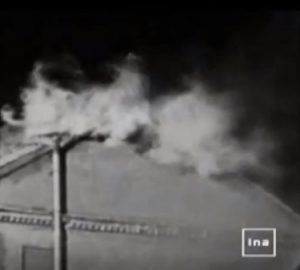
 Laissons maintenant LHR conclure son récit :
« Réfléchissons. S’il [Siri] n’avait pas été élu pape, il l’aurait dit avec autant de promptitude et de fermeté qu’à la question précédente. Ayant été élu, il ne pouvait le dire, tenu par le secret, et, ne pouvant mentir, il s’est retranché derrière ce secret. [Rectifions : ayant été élu, puis ayant démissionné sous contrainte, et donc trahi, il ne pouvait plus rien dire sans dévoiler sa trahison, ficelé par le « secret horrible » imposé par le premier intrus. S’il avait parlé, toute la mascarade aurait été démasquée, mais lui s’en serait sorti honorablement tout en risquant sa tête. Il a donc choisi le silence et s’est enfoncé dans sa trahison jusqu’à sa mort : voilà la triste vérité.]
En fait, il s’avère que j’ai dans mes proches quelqu’un qui le côtoie de près et qui m’a assuré que le cardinal leur a dit avoir été élu pape deux fois [en fait, 3 fois] : à la place de Paul VI, et à la place de Wojtyla [LHR oublie de dire le principal, à savoir, à la place de Roncalli]. La première [deuxième] fois il aurait refusé [dans ce cas, il n’y a pas besoin d’en parler], la seconde [troisième] on l’aurait obligé de refuser sous menace de schisme [ceci est une historiette qui n’a aucune valeur] !
Pour les trois témoins que nous fûmes [LHR, La Franquerie et Dallais], nous sommes repartis très ébranlés et pratiquement convaincus de son élection.
Et alors se posent de graves questions. A-t-il démissionné ? L’a-t-on forcé à démissionner ? Qu’en est-il de ces élections ? Quels lourds secrets pèsent sur lui ? [Tout ceci fait l’objet de ce Blog.]
Lors du dernier Synode [de 1985], il resta quelques heures et repartit. Malgré son âge avancé et le fait qu’il ait dépassé 75 ans, il n’a pas donné sa démission et on ne l’a pas exigée. [En fait il avait donné sa démission à 75 ans qui n’avait pas été acceptée ; elle se concrétisera en 1987.]
Alors ? Dernier cardinal nommé par Pie XII, nous laissons aux historiens et aux théologiens le soin d’étudier ce problème à fond et d’y répondre. Nous laissons simplement ce grave témoignage. »
(“Sous la Bannière”, juillet/août 1986)
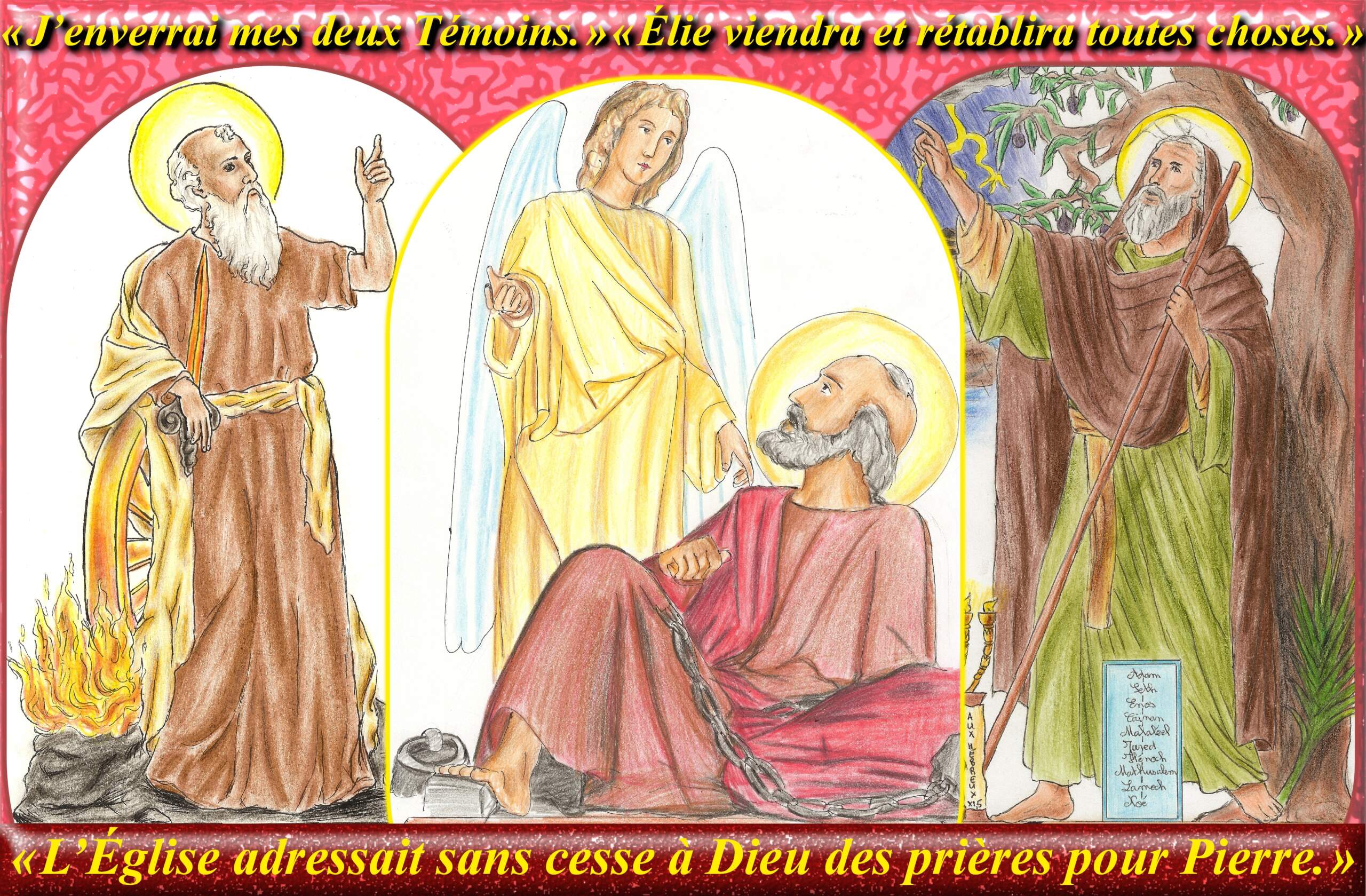
« Nier l’avènement futur et personnel d’Élie,
c’est une hérésie
ou une erreur qui approche de l’hérésie. »
(Saint Robert Bellarmin)
Pensez à TÉLÉCHARGER cette vidéo en cliquant sur les 3 points de suspension sous le titre, ici : https://odysee.com/@MontfortAJPM:b/f1266.-%C3%A0-j%C3%A9sus-par-marie-746-musique:f?lid=cd510e752e23862e040846f45ea3560cab8ddf5a
Let us now allow LHR to conclude his account:
RépondreSupprimer“Let us reflect. If [Siri] had not been elected pope, he would have said so just as promptly and firmly as he did in response to the previous question. Having been elected, he could not say so, bound as he was by secrecy, and, unable to lie, he took refuge behind that secrecy. [Let us correct this: having been elected, then having resigned under duress—and thus betrayed—he could no longer say anything without revealing his betrayal, bound by the “horrible secret” imposed by the first intruder. If he had spoken, the entire charade would have been exposed, but he would have come out of it honorably while risking his life. He therefore chose silence and sank deeper into his betrayal until his death: that is the sad truth.]
In fact, it turns out that I have someone among my close acquaintances who is in close contact with him and who assured me that the cardinal told them he had been elected pope twice [actually, three times]: in place of Paul VI, and in place of Wojtyla [LHR fails to mention the most important part, namely, in place of Roncalli]. The first [second] time he reportedly refused [in that case, there’s no need to discuss it], the second [third] time he was allegedly forced to refuse under threat of schism [this is a little story with no merit]!
As for the three of us who witnessed it [LHR, La Franquerie, and Dallais], we left deeply shaken and practically convinced of his election.
And so serious questions arise. Did he resign? Was he forced to resign? What about these elections? What heavy secrets weigh upon him? [All of this is the subject of this blog.]
During the last Synod [of 1985], he stayed for a few hours and left. Despite his advanced age and the fact that he was over 75, he did not tender his resignation, nor was it demanded of him. [In fact, he had tendered his resignation at age 75, which had not been accepted; it would take effect in 1987.]
So? As the last cardinal appointed by Pius XII, we leave it to historians and theologians to study this issue thoroughly and respond to it. We simply leave this serious testimony.”
(“Sous la Bannière,” July/August 1986)
Translated with DeepL.com (free version)
Lasciamo ora che LHR concluda il suo racconto:
RépondreSupprimer«Riflettiamo. Se [Siri] non fosse stato eletto papa, lo avrebbe detto con la stessa prontezza e fermezza con cui aveva risposto alla domanda precedente. Essendo stato eletto, non poteva dirlo, vincolato dal segreto, e, non potendo mentire, si è trincerato dietro quel segreto. [Precisiamo: essendo stato eletto, poi costretto a dimettersi e quindi tradito, non poteva più dire nulla senza svelare il proprio tradimento, intrappolato dal «segreto orribile» imposto dal primo intruso. Se avesse parlato, l’intera farsa sarebbe stata smascherata, ma lui ne sarebbe uscito con onore pur rischiando la testa. Ha quindi scelto il silenzio e si è sprofondato nel suo tradimento fino alla morte: ecco la triste verità.]
In realtà, risulta che tra i miei conoscenti ci sia qualcuno che gli sta vicino e che mi ha assicurato che il cardinale ha detto loro di essere stato eletto papa due volte [in realtà, tre volte]: al posto di Paolo VI e al posto di Wojtyla [LHR dimentica di dire la cosa principale, ovvero al posto di Roncalli]. La prima [seconda] volta avrebbe rifiutato [in questo caso, non c’è bisogno di parlarne], la seconda [terza] sarebbe stato costretto a rifiutare sotto minaccia di scisma [questa è una storiella che non ha alcun valore]!
Noi tre testimoni [LHR, La Franquerie e Dallais] siamo ripartiti profondamente scossi e praticamente convinti della sua elezione.
E allora sorgono gravi interrogativi. Si è dimesso? È stato costretto a dimettersi? Che ne è stato di quelle elezioni? Quali pesanti segreti gravano su di lui? [Tutto questo è oggetto di questo blog.]
Durante l’ultimo Sinodo [del 1985], rimase solo poche ore e poi ripartì. Nonostante la sua età avanzata e il fatto che avesse superato i 75 anni, non presentò le dimissioni e queste non gli furono richieste. [In realtà aveva presentato le dimissioni a 75 anni, ma non erano state accettate; esse si concretizzarono nel 1987.]
E allora? Ultimo cardinale nominato da Pio XII, lasciamo agli storici e ai teologi il compito di studiare a fondo questo problema e di darvi una risposta. Ci limitiamo a lasciare questa grave testimonianza.»
(«Sous la Bannière», luglio/agosto 1986)