 Le document qui suit est irréfutable, mais observons derechef que ce
n’est pas De Gaulle qui a fait Jean23 mais Siri-Benoît XVI qu’il ne faut
pas hésiter à qualifier de Judas II puisqu’il a vendu l’Église pour
préserver son propre intérêt afin, comme il le dit lui-même peu avant de
mourir, de ne pas avoir de problèmes avec quiconque.
Le document qui suit est irréfutable, mais observons derechef que ce
n’est pas De Gaulle qui a fait Jean23 mais Siri-Benoît XVI qu’il ne faut
pas hésiter à qualifier de Judas II puisqu’il a vendu l’Église pour
préserver son propre intérêt afin, comme il le dit lui-même peu avant de
mourir, de ne pas avoir de problèmes avec quiconque.


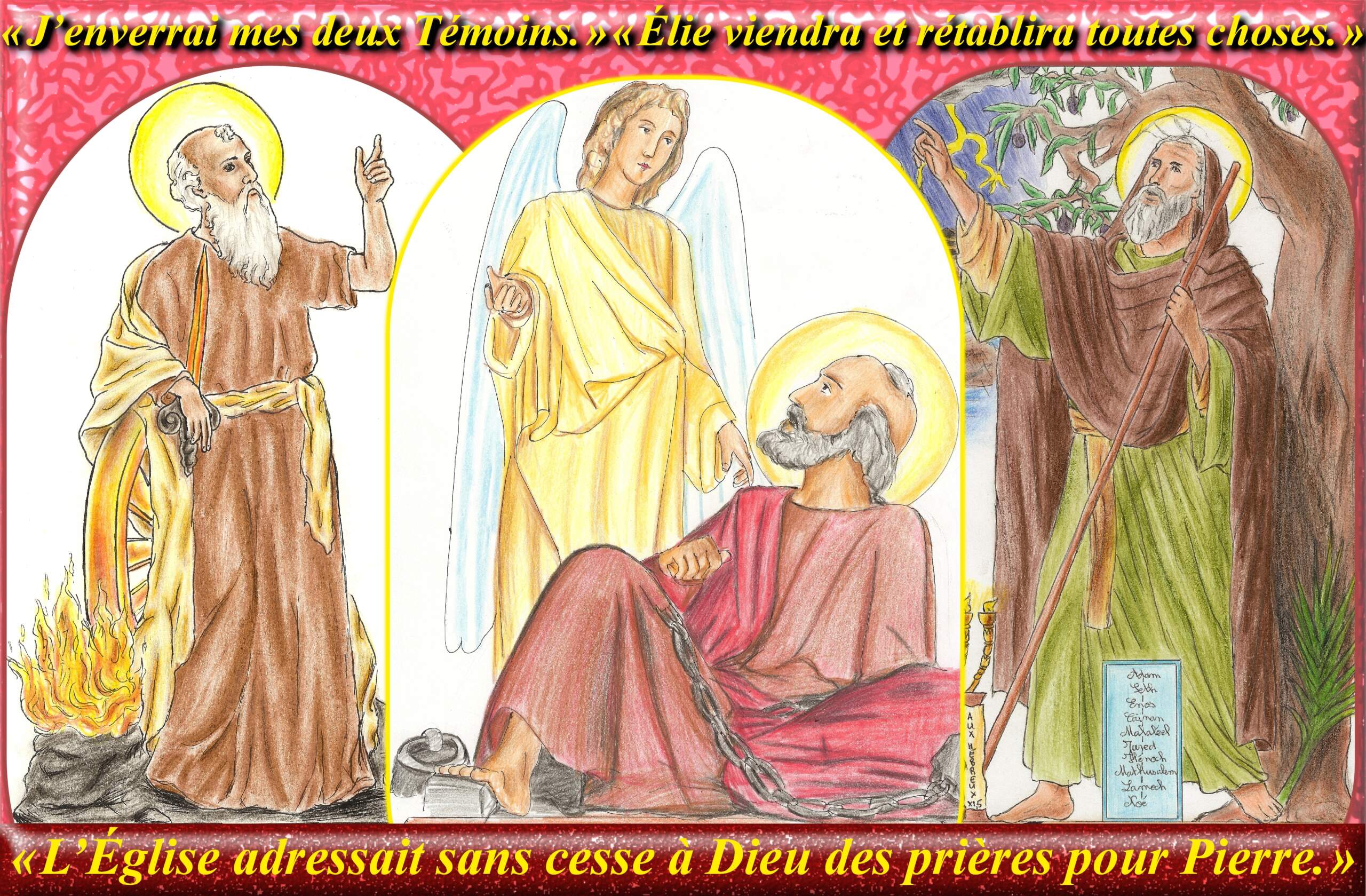
« Nier l’avènement futur et personnel d’Élie,
c’est une hérésie
ou une erreur qui approche de l’hérésie. »
(Saint Robert Bellarmin)
Pensez à TÉLÉCHARGER cette vidéo en cliquant sur les 3 points de suspension sous le titre, ici : https://odysee.com/@MontfortAJPM:b/f1283.-%C3%A0-j%C3%A9sus-par-marie-763-musique:e?lid=cd510e752e23862e040846f45ea3560cab8ddf5a
TEXTE de la première copie d'écran ci-dessus :
RépondreSupprimerArchivum Historiae Pontificiae,Vol. 40 (2002), pp. 323-324
BERTRAND DE MARGERIE, S.J.
RÔLE POSSIBLE DU GÉNÉRAL DE GAULLE
ET DE SON AMBASSADEUR
DANS L’ÉLECTION DU Bx. JEAN XXIII ?
J’ai sous les yeux des notes autobiographiques de mon père, Roland de Margerie (mort en 1990). Il était ambassadeur au Vatican depuis 1956 quand mourut le Pape Pie XII, le 9 octobre 1958.
Depuis de longues années, les grands journaux et les agences de presse nommaient des familiere du palais pontifical pour être tenus au courant de l’état de santé du Souverain Pontife.
Tout un système d’apparitions derrière les vitres de Castelgandolfo (signaux, gestes) avait été prévu. D’heure en heure et même plus souvent, en cas de crise aiguë, les correspondants pourraient suivre les événements. Des subventions auprès de petits personnages de la chancellerie vaticane étaient aussi prévues. Cette vénalité avait gagné même le professeur Galéazzi Lisi, médecin personnel du Saint Père. Son comportement parut si scandaleux pendant toute cette période que l’ordre des médecins brisa sa carrière !
Dès la mort de Pie XII, mon père se soucia d’envoyer au Quai d’Orsay un télégramme précisant les problèmes qu’allait poser à la France l’élection de son successeur. Quels mérites seraient pour elle essentiels chez le futur pape, quels défauts rédhibitoires ? Nous devions souhaiter un Pape « qui ne soit politiquement inféodé à personne, pleinement conscient du rôle joué par la France dans le monde et dans l’Église, soucieux d’éviter tout conflit entre Église et État, qui comprenne donc les besoins de ce dernier, comme les problèmes de l’Église en France et dont les conceptions en matière de doctrine et d’autorité ne favorisent pas un conflit entre Papauté et opinion française ».
Dans ces perspectives, plusieurs cardinaux italiens devaient être écartés. Demeuraient le cardinal Lercaro, qui avait une grande valeur mais paraissait impulsif, Mgr Montini, archevêque de Milan, mais non cardinal ; n’ayant donc pas de chance d’être élu, mais pouvant être le secrétaire d’État du prochain Pape ; et le cardinal Roncalli, connaissant l’Orient chrétien par ses délégations apostoliques à Sofia et à Ankara et la France comme longuement nonce à Paris.
TEXTE de la deuxième copie d'écran ci-dessus :
SupprimerLe 11 octobre, le Général de Gaulle fait chercher à Rome mon père dans son avion présidentiel pour lui donner à Paris ses instructions en vue du Conclave. Aucun choix ne s’imposait, à la différence de ce qui eut lieu en 1939, lors de l’élection du cardinal Pacelli. Mais il fallait éviter un pape autoritaire. De Gaulle disait textuellement : « Je ne veux pas d’un Pape orageux » et encore : « Il nous faut un pape dont le règne ne dure pas trop longtemps et qui prépare la voie, pour plus tard au grand pape que pourrait être Mgr Montini. Car l’avenir c’est le drame. Une troisième guerre mondiale est peut-être inévitable. Dans cette hypothèse, il est essentiel que règne sur l’Église un homme sur qui le monde occidental puisse s’appuyer dans la tourmente. » Le Général revient plusieurs fois à cette perspective apocalyptique.
Conclusion : parmi les différentes candidatures possibles, le Général jugeait souhaitable la désignation d’un « honnête vieillard » (ce furent ses termes), qui prendrait Mgr Montini comme secrétaire d’État. Parmi eux, figurait en bon rang Mgr Roncalli. Le Général autorisa mon père à faire état de ces considérations auprès des cardinaux français et à les exposer en termes généraux aux cardinaux et ambassadeurs étrangers.
Visiblement, il était impossible à ses yeux que l’élection d’un Pape se déroulât sans que la France eût son mot à dire, alors même que sa responsabilité directe n’était pas engagée.
Dans les jours suivants, mon père s’entretint avec les ambassadeurs d’Allemagne, de Portugal, d’Espagne et de Belgique : aucun n’avait reçu l’ombre d’une instruction de son gouvernement. Pas même l’Espagnol ! Ils s’intéressèrent à ce qu’on disait à Paris : nos réflexions d’ordre général ne traduisaient pas encore des préférences individuelles mais se bornaient à une vue d’ensemble de ce que la Papauté représentait pour le monde libre, avec des vœux d’avenir en faveur de Mgr Montini.
Comme le confirma le protestant M. Couve de Murville, ministre des affaires étrangères, « le Général se passionnait pour le Conclave », au point de réclamer à ses collaborateurs le texte complet des télégrammes de mon père. Sans prétendre que toute cette campagne du Général et de mon père ait joué un rôle décisif auprès des cardinaux électeurs, elle confirme du moins l’impression qu’hommes d’État catholiques et diplomates croyants et incroyants peuvent devenir, aux mains d’une Providence qui gouverne l’histoire universelle et même les individus, des instruments utiles. Elle a ses fins propres et elle voulait ce que ni les uns ni les autres ne pouvaient deviner : l’élection de Jean XXIII en vue de la réalisation d’un concile œcuménique orienté vers l’unité des chrétiens et vers le renouveau de l’Église, notamment par l’importance donnée aux laïcs.
The following document is irrefutable, but let us note once again that it was not De Gaulle who created John XXIII, but rather Benedict XVI, whom we should not hesitate to describe as Judas II, since he sold out the Church to protect his own interests so that, as he himself said shortly before his death, he would not have any problems with anyone.
RépondreSupprimer"Archivum Historiae Pontificiae, Vol. 40 (2002), pp. 323–324
BERTRAND DE MARGERIE, S.J.
THE POSSIBLE ROLE OF GENERAL DE GAULLE
AND HIS AMBASSADOR
IN THE ELECTION OF BLESSED JOHN XXIII?
I have before me the autobiographical notes of my father, Roland de Margerie (who died in 1990). He had been ambassador to the Vatican since 1956 when Pope Pius XII died on 9 October 1958.
For many years, the major newspapers and press agencies had appointed contacts within the papal palace to keep them informed of the Supreme Pontiff’s state of health.
A whole system of signals (gestures, signs) behind the windows of Castel Gandolfo had been devised. Hour by hour, and even more frequently in the event of an acute crisis, correspondents could follow the events. Bribes to minor figures in the Vatican chancellery were also planned. This venality had even infected Professor Galéazzi Lisi, the Holy Father’s personal physician. His behaviour appeared so scandalous throughout this period that the medical association ruined his career!
As soon as Pius XII died, my father took care to send a telegram to the Quai d’Orsay setting out the problems that the election of his successor would pose for France. What qualities would be essential for France in the future pope, and what flaws would be deal-breakers? We had to hope for a Pope ‘who was not politically beholden to anyone, fully aware of the role played by France in the world and in the Church, anxious to avoid any conflict between Church and State, and who therefore understood the needs of the latter, as well as the problems of the Church in France, and whose views on doctrine and authority do not encourage conflict between the Papacy and French public opinion’.”
From this perspective, several Italian cardinals had to be ruled out. That left Cardinal Lercaro, who was highly regarded but seemed impulsive, and Monsignor Montini, Archbishop of Milan, though not a cardinal; and thus had no chance of being elected, though he could serve as the next Pope’s Secretary of State; and Cardinal Roncalli, who knew the Christian East through his apostolic delegations to Sofia and Ankara, and France through his long tenure as nuncio in Paris.
...
...On 11 October, General de Gaulle had my father flown from Rome to Paris in his presidential aircraft to brief him on the Conclave. There was no obvious choice, unlike in 1939, when Cardinal Pacelli was elected. But an authoritarian pope had to be avoided. De Gaulle said, word for word: ‘I do not want a tempestuous Pope’ and again: ‘We need a pope whose reign does not last too long and who paves the way, for the future, for the great pope that Monsignor Montini could become. For the future holds tragedy. A third world war may be inevitable. In that scenario, it is essential that the Church be led by a man on whom the Western world can rely in the midst of turmoil.” The General returned to this apocalyptic prospect on several occasions.
SupprimerConclusion: among the various possible candidates, the General considered it desirable to appoint an ‘honest old man’ (those were his words), who would take Monsignor Montini as Secretary of State. Among them, Monsignor Roncalli featured prominently. The General authorised my father to convey these considerations to the French cardinals and to set them out in general terms to the foreign cardinals and ambassadors.
Clearly, in his view, it was impossible for the election of a Pope to take place without France having its say, even though it bore no direct responsibility.
In the days that followed, my father spoke with the ambassadors of Germany, Portugal, Spain and Belgium: none of them had received the slightest instruction from their governments. Not even the Spaniard! They were interested in what was being said in Paris: our general reflections did not yet reflect individual preferences but were limited to an overview of what the Papacy represented for the free world, with hopes for the future in favour of Monsignor Montini.
As the Protestant Mr Couve de Murville, Minister for Foreign Affairs, confirmed, ‘the General was passionate about the Conclave’, to the point of asking his staff for the full text of my father’s telegrams. Without claiming that this entire campaign by the General and my father played a decisive role among the cardinal electors, it at least confirms the impression that Catholic statesmen and diplomats, whether believers or non-believers, can become, in the hands of a Providence that governs universal history and even individuals, useful instruments. Providence has its own ends, and it willed what neither the one nor the other could have guessed: the election of John XXIII with a view to the realisation of an ecumenical council oriented towards Christian unity and the renewal of the Church, notably through the importance given to the laity."
Il documento che segue è inconfutabile, ma osserviamo ancora una volta che non è stato De Gaulle a creare Giovanni XXIII, bensì Siri-Benedetto XVI, che non si deve esitare a definire Giuda II, poiché ha venduto la Chiesa per salvaguardare i propri interessi, al fine, come egli stesso afferma poco prima di morire, di non avere problemi con nessuno.
RépondreSupprimer"Archivum Historiae Pontificiae, vol. 40 (2002), pp. 323-324
BERTRAND DE MARGERIE, S.J.
POSSIBILE RUOLO DEL GENERALE DE GAULLE
E DEL SUO AMBASCIATORE
NELL’ELEZIONE DEL BEATO GIOVANNI XXIII?
Ho sotto gli occhi alcune note autobiografiche di mio padre, Roland de Margerie (morto nel 1990). Era ambasciatore presso il Vaticano dal 1956 quando morì Papa Pio XII, il 9 ottobre 1958.
Da molti anni, i principali quotidiani e le agenzie di stampa nominavano persone di fiducia presso il palazzo pontificio per essere tenuti al corrente delle condizioni di salute del Sommo Pontefice.
Era stato previsto un intero sistema di segnali dietro le vetrate di Castel Gandolfo (segnali, gesti). Di ora in ora e anche più spesso, in caso di crisi acuta, i corrispondenti avrebbero potuto seguire gli eventi. Erano previste anche tangenti da parte di personaggi di secondo piano della cancelleria vaticana. Questa venalità aveva contagiato persino il professor Galéazzi Lisi, medico personale del Santo Padre. Il suo comportamento apparve talmente scandaloso durante tutto quel periodo che l’ordine dei medici ne distrusse la carriera!
Non appena morì Pio XII, mio padre si premurò di inviare al Quai d’Orsay un telegramma in cui precisava i problemi che l’elezione del suo successore avrebbe posto alla Francia. Quali meriti sarebbero stati essenziali per lei nel futuro papa, quali difetti insormontabili? Dovevamo auspicarci un Papa «che non fosse politicamente asservito a nessuno, pienamente consapevole del ruolo svolto dalla Francia nel mondo e nella Chiesa, attento a evitare ogni conflitto tra Chiesa e Stato, che comprendesse quindi le esigenze di quest’ultimo, così come i problemi della Chiesa in Francia e le cui concezioni in materia di dottrina e di autorità non favorissero un conflitto tra il Papato e l’opinione pubblica francese».
In questa prospettiva, diversi cardinali italiani dovevano essere esclusi. Rimanevano il cardinale Lercaro, che aveva grandi qualità ma appariva impulsivo, monsignor Montini, arcivescovo di Milano, ma non cardinale; che quindi non aveva alcuna possibilità di essere eletto, ma che avrebbe potuto ricoprire la carica di Segretario di Stato del prossimo Papa; e il cardinale Roncalli, che conosceva l’Oriente cristiano grazie alle sue delegazioni apostoliche a Sofia e ad Ankara e la Francia in quanto nunzio di lunga data a Parigi.
...
Tradotto con DeepL.com (versione gratuita)
...L’11 ottobre, il generale de Gaulle fece venire mio padre a Roma con il suo aereo presidenziale per dargli a Parigi le sue istruzioni in vista del Conclave. Nessuna scelta si imponeva, a differenza di quanto era accaduto nel 1939, in occasione dell’elezione del cardinale Pacelli. Ma bisognava evitare un papa autoritario. De Gaulle diceva testualmente: «Non voglio un papa irascibile» e ancora: «Ci vuole un papa il cui pontificato non duri troppo a lungo e che prepari la strada, in vista del futuro, al grande papa che potrebbe essere monsignor Montini. Perché il futuro è un dramma. Una terza guerra mondiale è forse inevitabile. In questa ipotesi, è essenziale che alla guida della Chiesa vi sia un uomo su cui il mondo occidentale possa fare affidamento nella tempesta». Il Generale torna più volte su questa prospettiva apocalittica.
SupprimerConclusione: tra le diverse candidature possibili, il Generale riteneva auspicabile la nomina di un «onesto anziano» (queste furono le sue parole), che avrebbe assunto monsignor Montini come Segretario di Stato. Tra questi figurava in buona posizione monsignor Roncalli. Il Generale autorizzò mio padre a riferire queste considerazioni ai cardinali francesi e a esporle in termini generali ai cardinali e agli ambasciatori stranieri.
Evidentemente, ai suoi occhi era impossibile che l’elezione di un Papa avvenisse senza che la Francia avesse voce in capitolo, anche se la sua responsabilità diretta non era in gioco.
Nei giorni successivi, mio padre si incontrò con gli ambasciatori di Germania, Portogallo, Spagna e Belgio: nessuno di loro aveva ricevuto la minima istruzione dal proprio governo. Nemmeno quello spagnolo! Si interessarono a ciò che si diceva a Parigi: le nostre riflessioni di carattere generale non riflettevano ancora preferenze individuali, ma si limitavano a una visione d’insieme di ciò che il Papato rappresentava per il mondo libero, con auguri per il futuro a favore di monsignor Montini.
Come confermò il protestante M. Couve de Murville, ministro degli Affari Esteri, «il Generale era appassionato del Conclave», al punto da richiedere ai suoi collaboratori il testo completo dei telegrammi di mio padre. Senza pretendere che l’intera campagna del Generale e di mio padre abbia svolto un ruolo decisivo presso i cardinali elettori, essa conferma almeno l’impressione che gli uomini di Stato cattolici e i diplomatati, credenti e non credenti, possano diventare, nelle mani di una Provvidenza che governa la storia universale e persino i singoli individui, strumenti utili. Essa ha i suoi fini propri e voleva ciò che né gli uni né gli altri potevano intuire: l’elezione di Giovanni XXIII in vista della realizzazione di un concilio ecumenico orientato verso l’unità dei cristiani e verso il rinnovamento della Chiesa, in particolare attraverso l’importanza attribuita ai laici."
Tradotto con DeepL.com (versione gratuita)